
How mental health is ignored in the pursuit of athletic and academic greatness
Updated: Oct 5
By: Joshua Kahn, Staff Writer
Suicide rates in people ages 10-24 has risen 38 percent in the last two years, with academic establishments struggling to keep up with the epidemic rise in mental health struggle amongst young people.
College students that were taken by suicide from across the state of California were shown as images on backpacks remembering their lives in an event on campus last Wednesday. The event was hosted by Valley’s mental health services and Faces of Suicide, an organization which helps parents and family members remember and grapple with those who committed suicide.
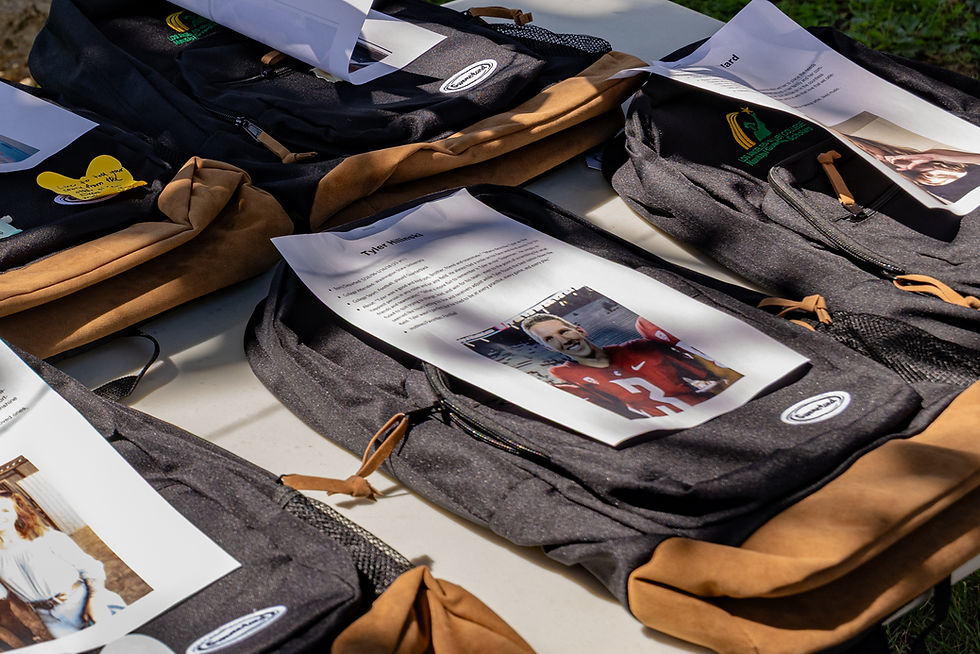
“My daughter took her life and the website connected people throughout the internet and I wanted a way to remember her life and I just thought it would be a great way to see their faces and to see how great of a life they lived,” says Karlyn Brazier who made the website Faces of Suicide.
Mental health struggles have become an important issue among college students, but particularly among student-athletes who face additional pressures as they balance academics with the demands of their sports. Athletes may have to maintain their grades while attending early morning practices, competing in games and dealing with the expectations that come with being a college athlete.
According to a paper by Nicole Small, who has a Master of Social Work from CSUN, “Student athletes experience more symptoms of depression than student non-athletes, with the data approaching statistical significance. Student athletes and student non-athletes utilize mental health services at similar rates.”
Athletes will oftentimes ignore mental symptoms and avoid reporting to staff or other teammates to help the team; the stigma that portraying themselves as mentally tough is best for their team.
“Coaches always have their office door open to talking to students about their struggles on the field or off the field,” says athletic director Dave Mallas. “Letting these athletes know that they deal with the same issues as regular students helps them make sure that they are normal and don’t have the sense that they are the only person dealing with these issues.”
Professor of Psychology at Valley, Ali Ghassemi, said addressing mental health is an important part of helping student-athletes.
“In my opinion, the most important step is to reduce the stigma surrounding mental health struggles. Achieving this requires coaches, trainers and athletic staff to be educated about the mental health challenges that student-athletes may face and to recognize that these struggles are just as legitimate as physical injuries. Coaches and trainers must be willing and able to view mental health struggles with the same sympathetic lens as physical injuries.”
Mental health struggles have also affected athletes competing at the highest levels of their sports. 4-time Grand Slam Tennis player Naomi Osaka and 23 gold medalist Olympic swimmer Michael Phelps have both publicly discussed their experiences with mental health.
Their experiences demonstrate that mental health struggles are not limited to athletes who are struggling on the fields of colleges; even athletes who reach the highest levels of their sports can experience difficulties with their mental health.
For student-athletes, the challenge can be deciding whether to keep those struggles private or talk about them with people they trust. Public athletes have also used their platforms to speak openly about their experiences and remind others that they are not alone.
For athletes at Valley College and elsewhere, creating an environment where mental health can be discussed openly could make it easier for students to seek support while continuing to pursue their academic and athletic goals.


When talking about any game, I feel that looking only at the final result is not enough. big mumbai login Understanding the gameplay, rules, different situations, and the decisions players make gives a much better overall picture.
Can someone explain dhani win login colour prediction in a simple way? I’ve seen people talk about patterns, but I’m not sure if there is any fixed method or if results are random. Please share your thoughts.
One thing I appreciate about Portal Seva is the focus on helping people discover government-related information. Users often need different online services, and a convenient starting point can make finding relevant resources easier and less time-consuming.
Great piece. The line that hit hardest was the one about athletes staying silent "to help the team" — that mentality is so deeply ingrained, and it's exactly what makes the stigma so dangerous. It's encouraging to see coaches and staff at Valley speaking openly about this, but as the article shows, awareness has to translate into real support systems, not just open-door policies. Athletes are often praised for pushing through pain, and we need to make it just as admirable to ask for help.